Austin operators we admire. Three builds worth studying.
A read of three operator-led Austin storefronts — what each gets right, from the public site. These are brands we admire, not Digital Heroes clients.
Three operators, three builds worth studying.
Three operator-led Austin brands run commerce builds worth studying: Amanda Deer Jewelry (Shopify, handmade jewelry), Sanara Skincare (Shopify, clean beauty), and Sendspark (SaaS, async video). None are Digital Heroes clients. They are the kind of founder-run, operator-led businesses we admire and build for in Austin, and this is an editorial read of what each gets right, taken from the public storefront.
How we chose, and what this is not.
- These are operator-led brands we admire in the Austin market, picked from public research — not Digital Heroes clients. No affiliation, no engagement, no endorsement is implied.
- Every observation is our own editorial read of each brand's public homepage. The screenshots are public storefronts, shown for commentary.
- Digital Heroes is excluded from this list — we do not rank ourselves alongside brands we admire.
- Each brand links to its own site. Go buy from them.
Amanda Deer Jewelry. Personalization done cleanly.
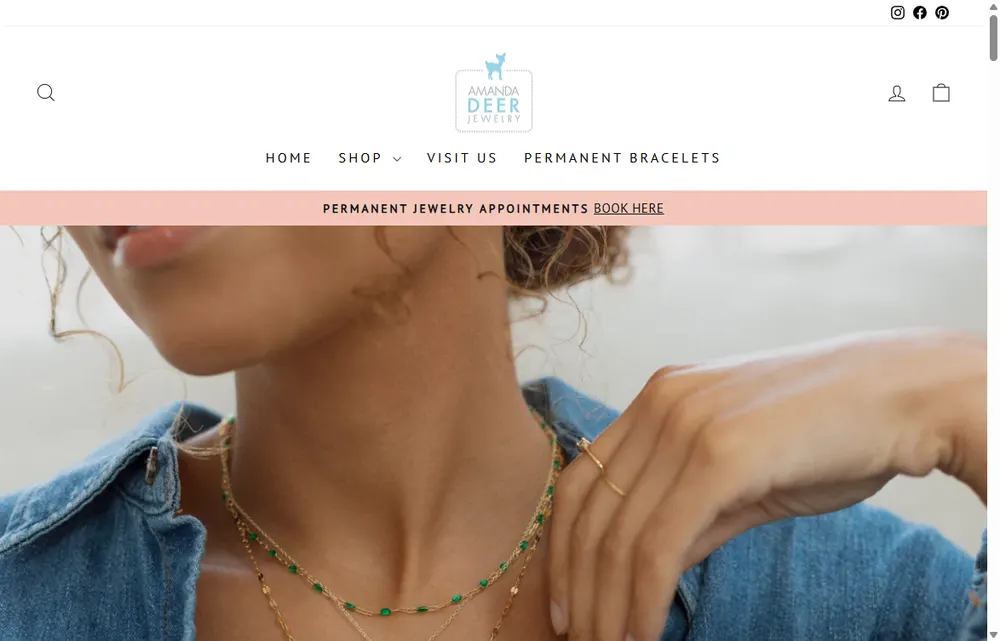
Founder-designer Amanda Eddy runs a handmade-jewelry catalog on Shopify, and the build leans into the hardest problem in jewelry commerce: a deep catalog where every piece is photography-led and many are personalized. The homepage prioritizes editorial product photography over chrome, which is the right call — in jewelry, the image is the sales pitch, and a lighter page lets it load fast.
What an operator can learn here: personalization (engraving, custom sizing) is handled as a product decision, not a bolt-on. When personalization lives in the variant and line-item-property layer rather than a third-party pop-up, the cart, checkout, and fulfillment export all stay clean — which is exactly what keeps a handmade brand shippable as volume grows. Gift-buyers also need fast trust signals, and a jewelry storefront that surfaces reviews and shipping clarity near the product, not buried in the footer, converts the nervous first-time gift buyer.
Sanara Skincare. The ingredient story carries the PDP.

Founder Rebekah Jasso Jensen's clean-beauty brand runs the pattern that separates a skincare storefront that sells from one that just looks nice: the ingredient story does the selling, and the build gives it room. Clean beauty is a trust purchase — the buyer is reading for what is in the bottle and what is left out — so the product page that wins is the one structured to answer that before asking for the add-to-cart.
What an operator can learn here: skincare rewards a PDP architecture with ingredient callouts, the "what it does / what it leaves out" framing, and routine-building cross-sells that feel like advice rather than upsells. The other quiet lever is subscription — a replenishable product like skincare is a natural fit for a subscribe-and-save flow, and brands that wire that in early build predictable recurring revenue instead of re-acquiring the same customer every 30 days.
Sendspark. A different shape of commerce.

Sendspark, an async-video tool for sales and outreach, is the SaaS counterpoint to the two Shopify brands — and a reminder that "commerce build" is not only a storefront. The homepage's job is product-led: show the product doing the thing in the first scroll, then route to a free trial rather than a 12-field demo form. The page is also the lightest of the three to load, which for a product-led SaaS is a conversion lever, not a vanity metric.
What an operator can learn here: a SaaS landing page and a DTC product page solve the same problem in different dialects — match the message to the source, answer the one objection that matters, ask for a single action. For Sendspark that action is "try it," with the product visible before the ask. For a Shopify brand it is "add to cart," with trust visible before the ask. Same discipline, different verb.
Austin's operator-led commerce runs deeper than three.
Austin's commerce scene is genuinely founder-led — South Congress retail, a tech-corridor SaaS bench, and a creator-economy layer that all push operator-run brands rather than venture-flipped ones. The three above are the commerce-and-software operators we find most instructive to read, but they are a sample, not a ranking. We expect to add to this teardown as we read more Austin storefronts.
If you run an operator-led Austin brand and want an honest read of your own build — what is converting, what is leaking, and what a careful Shopify or web team would change first — that is the kind of work we do. The audit is free and the framing is plain. We will tell you if a refresh beats a rebuild.
Want a read of your Austin build?
A 30-minute call, a live look at your storefront, and an honest list of what we would change first. No pitch theatre.

Published .